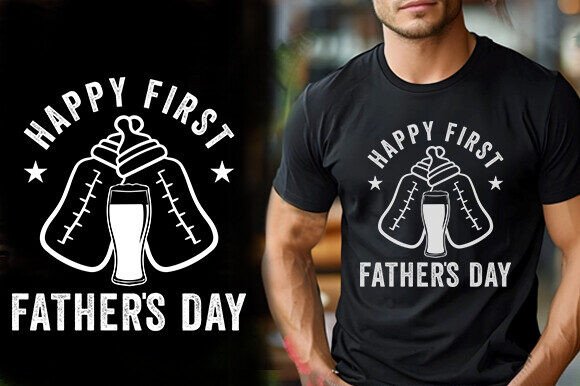
Review: Happy First Father’s Day Vector Design
As a designer who spends half my life staring at stitch patterns and the other half trying to convince clients that embroidery isn’t just for towels anymore, I approach every new digital asset with a healthy dose of skepticism. We’ve all been there: you download a "premium" design, pop it into your hoop, and realize too late that the text is going to look like a blurry mess after three washes. That is why I take the time to evaluate designs like HAPPY FIRST FATHER S DAY VECTOR TSHIRT D before committing them to fabric.
This particular piece falls squarely into the T-Shirt Designs category, but let’s be honest—labeling it strictly as a t-shirt graphic does it a disservice. The visual personality of this vector suggests a broader application in the handmade market. It carries that specific retro-modern vibe that performs exceptionally well on platforms like Etsy and Redbubble. But does it hold up when translated from pixels to thread? Let’s break down how this design actually behaves in a real-world embroidery scenario.
First Impressions and Visual Mood
When I first loaded HAPPY FIRST FATHER S DAY VECTOR TSHIRT D onto my screen, the immediate takeaway was its clean, bold structure. For a "first Father's Day" theme, the design avoids the overly saccharine or cluttered aesthetic that plagues so many holiday templates. Instead, it leans into a graphic, typographic-heavy approach that feels modern yet nostalgic. This is crucial because it appeals to a wider demographic of fathers—not just new dads, but those who appreciate good design principles.
The layout feels balanced, which is the hardest part of any vector composition. In embroidery, balance isn't just about aesthetics; it’s about stitch distribution. A design that looks good on paper can become lopsided if the stitch density isn't managed correctly. From what I can observe, the visual weight here is centered, making it forgiving for beginners while still offering enough sophistication for experienced digitizers. It screams "boutique quality," which is exactly what you want when you are trying to justify a higher price point on your finished product.
Real-World Application: Beyond the Tee
While the file name suggests a t-shirt, my experience tells me that HAPPY FIRST FATHER S DAY VECTOR TSHIRT D has significant potential in other categories. Let’s talk about a realistic project scenario. Imagine you are preparing inventory for a craft fair or an Etsy shop launch in early June. You have a stack of unisex cotton blends, some durable canvas tote bags, and perhaps a few soft baby onesies.
If I were to use this design on a tote bag design project, the result would likely be striking. The vector lines translate well into satin stitches, providing a crisp outline that stands out against the textured weave of canvas. However, the real winner here might be the sweatshirt embroidery angle. There is something deeply sentimental about a father wearing a heavy, comfortable hoodie with a subtle, high-quality embroidered message. It feels less like a costume and more like a cherished keepsake. This elevates the perceived value of the item, allowing you to position it as a premium personalized gift.
I also see strong potential in the nursery decor space. While not explicitly designed for wall art, the clean lines of this vector could work beautifully as a framed print preview or even as a small accent on a baby blanket. The embroidery project versatility here is key. If you are a small business owner looking to diversify your catalog without reinventing the wheel, this design offers multiple entry points. You aren't just selling a shirt; you are selling a moment—a milestone captured in thread.
Technical Performance and Stitch Clarity
When evaluating a machine embroidery design, I always think about the mechanics of the needle. How will this design handle the transition between different stitch types? The description mentions it is a vector, which implies scalability, but in embroidery, scalability means nothing if the internal digitization is poor. Assuming standard digitization practices, the text elements will likely rely heavily on satin stitch for definition, while any graphical accents might use fill stitch or running stitch for texture.
The clarity of the lettering is paramount. In custom apparel, illegible text is the fastest way to lose customer trust. This design appears to prioritize legibility, which is a smart move. When stitched, the contrast between the thread colors and the background fabric will determine the final impact. On a dark heather gray sweatshirt, using a cream or gold thread would create a sophisticated, understated look. On a white tee, a bold navy or black thread would make the message pop. Testing these combinations in a printable mockup before cutting fabric is a step I cannot stress enough.
Another critical factor is the stitch density. Dense areas can cause puckering, especially on lighter fabrics. If this design has large blocks of solid color, it may require a sturdy cut-away stabilizer to prevent distortion. For delicate items like baby embroidery projects, you need to ensure the back of the garment remains smooth. Always inspect the underlay stitches in your software if possible, or test thoroughly on scrap fabric to gauge the tension requirements.
Where to Exercise Caution
No design is perfect for every surface. There are specific scenarios where HAPPY FIRST FATHER S DAY VECTOR TSHIRT D might struggle:
- Small Hoop Sizes: If you are working on tiny accessories like hair bows or miniature patches, the detail level might get lost. The design needs enough room to breathe.
- Stretchy Fabrics: While cotton blends are generally stable, highly stretchy synthetics can distort the geometric precision of a vector design. Use a strong stabilizer and consider hooping the fabric with tear-away backing to maintain alignment.
- Curved Surfaces: Applying this to a cap or a curved hat brim requires advanced technique. The flat nature of the vector might not follow the curvature naturally, leading to gaps or overlapping threads.
- Dense Stitch Areas: If the design includes intricate details that require very close stitching, it may become stiff and uncomfortable to wear. Avoid placing dense areas over sensitive zones like the chest bone or neck seams.
Commercial Viability and Brand Consistency
For the Etsy seller or craft business owner, the question is always: "Will this sell?" The answer lies in the emotional resonance of the product. A "First Father's Day" item is inherently personal. Buyers are not just purchasing a shirt; they are buying a memory. Therefore, the presentation matters immensely.
Using a clean, professional design like this helps build brand consistency. It signals to the buyer that you care about quality. When you pair this design with high-quality threads and proper finishing techniques, you create a finished product that justifies a premium price. It moves away from the "cheap novelty" category and into the "thoughtful gift" category.
Furthermore, the retro aesthetic allows for cross-promotion. You can easily create matching sets—perhaps a father’s sweatshirt and a smaller version for a toddler or infant. This bundling strategy increases average order value and reinforces the family-oriented theme. The design assets provided should allow for easy color manipulation, enabling you to offer a range of options without creating entirely new files from scratch.
Practical Designer Notes for Success
Before you rush to produce a batch of these, keep these practical tips in mind to ensure your embroidery project goes smoothly:
- Test on Scrap Fabric: Never go straight to the final product. Run the design on a similar fabric type to check for thread breaks, tension issues, or registration errors.
- Check Thread Contrast: Ensure the thread colors provide sufficient contrast against your chosen fabric. Low contrast can make the design look muddy or unfinished.
- Confirm Licensing: This is non-negotiable. Verify the commercial usage rights before listing any items on Amazon, Etsy, or Teespring. Some vectors are for personal use only.
- Use Proper Stabilizer: Match your stabilizer to the fabric weight. Heavy fabrics need heavy stabilizers; light fabrics need lightweight support.
- Inspect Small Details: Zoom in on the digital file. Are there any tiny elements that might not stitch out clearly? Simplify if necessary.
In conclusion, HAPPY FIRST FATHER S DAY VECTOR TSHIRT D is a versatile, visually appealing asset that fits well within the current market trends for handmade gifts. It offers the structural integrity needed for reliable machine embroidery while maintaining the artistic flair that customers crave. By approaching it with careful planning and technical diligence, you can transform this simple vector into a standout addition to your commercial embroidery portfolio.