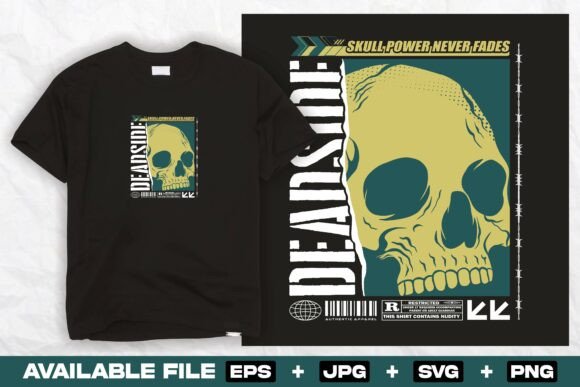
Grunge Skull Graphic Illustration Design Review
When I sit down to evaluate a new design asset for my studio, I am rarely looking at it as just an image. I am looking at how it will behave under the needle. I am thinking about thread tension, fabric distortion, and whether the final stitched piece will hold up to real-world wear. That is why Grunge Skull Graphic Illustration Design caught my attention. It is marketed heavily as a vector graphic for T-shirts and streetwear, but for those of us working in the embroidery space, the question is always: does this translate well from screen to stitch?
This review is not about the digital file’s resolution or its color palette on a monitor. It is about practical application. If you are an Etsy seller, a craft fair exhibitor, or a small business owner creating custom apparel, you need to know if this design has the visual weight and structural clarity to survive the embroidery process without turning into a muddy mess.
The Visual Personality and First Impressions
The moment you look at Grunge Skull Graphic Illustration Design, the mood is immediately established. It is not a clean, corporate skull. It is raw, textured, and steeped in a vintage retro aesthetic. This grunge style relies heavily on noise, distress marks, and irregular edges. For a graphic designer, this is easy to manage. You can simply adjust opacity or apply filters. But for an embroiderer, those "grunge" elements present a unique challenge and opportunity.
The layout feels balanced enough to serve as a central focal point on a garment, yet detailed enough to demand respect from the viewer. It screams streetwear. It fits naturally into a punk-rock vibe, a gothic subculture aesthetic, or even a modern, edgy minimalist wardrobe where a single bold statement piece is preferred over subtle patterns. The visual personality is confident and slightly rebellious, which translates beautifully to handmade products that aim to make a statement.
Because the design is made with 100% vector graphics, the lines are crisp before they ever hit the hoop. This gives us a clean baseline to work from. However, we must remember that embroidery simplifies reality. A vector line becomes a satin stitch column; a shaded area becomes a fill stitch. The success of this project depends entirely on how we interpret those vector details into thread.
Real-World Application: From Screen to Stitch
Let’s imagine a specific scenario. You are preparing a batch of custom embroidered tote bags for a holiday gift market. You want something that stands out on a rack of canvas bags. You choose Grunge Skull Graphic Illustration Design. On the bag, centered on the front panel, this design works exceptionally well. The high contrast of a dark skull against a natural canvas or a black tote bag creates immediate visual impact.
Similarly, consider sweatshirt embroidery. A crewneck sweatshirt provides a stable, medium-weight fabric that handles dense stitching very well. Placing this design on the chest or across the back allows the grunge texture to shine through. The rough edges of the skull mimic the distressed look of worn-in vintage tees, making the finished product feel authentic rather than mass-produced. It adds value to the item because it looks like a curated, boutique-level design rather than a generic clipart placement.
This design also shines in the realm of personalized gifts. Imagine a cap or a hat for a client who loves rock music or alternative fashion. The curved surface of a cap can be tricky, but the organic, non-geometric nature of the grunge skull means slight distortions during stitching won’t ruin the overall shape. In fact, a slightly imperfect stitch might enhance the intended aesthetic. For baby embroidery, however, I would advise caution. While the design is striking, the theme may not align with all parents’ tastes for nursery decor or baby clothes. It is better suited for older children, teens, or adults.
Where to Exercise Caution
No design is perfect for every situation, and Grunge Skull Graphic Illustration Design has specific limitations that you must respect. First, avoid small hoop sizes. If you try to shrink this design down to fit a tiny patch or a delicate lace trim, you will lose the character. The grunge details will merge into a solid blob, and the intricate textures will disappear. Stick to medium to large hoop sizes where the detail can breathe.
Textured fabrics are another area requiring careful testing. If you attempt to stitch this onto a thick, nubby wool or a highly textured knit, the stabilizer may not provide enough support, leading to puckering. Furthermore, thin or stretchy fabrics require robust stabilizers to prevent the design from warping. When stitching on dark fabric, ensure your thread colors offer sufficient contrast. A dark gray skull on black fabric will vanish unless you use a bright underlay or a contrasting top thread.
Dense stitch areas are inherent in fill stitches, and this design likely contains several. Ensure your machine can handle the density without breaking needles or jamming thread. Also, be mindful of curved surfaces like caps. While the organic shape helps, extreme curvature can cause registration issues if the hooping is not precise. Finally, for products that need frequent washing, such as aprons or kitchen towels, verify the stability of the stitches. A poorly executed fill stitch on a high-friction item may fray or pill over time.
Practical Designer Notes for Success
To get the best results from this embroidery project, follow these practical steps. Always test the design on scrap fabric first. This is non-negotiable. You need to see how the stitch density interacts with your specific fabric choice. Check the thread color contrast by holding different thread spools up to the fabric. Sometimes, a lighter thread can pick up the grunge details better than a matching dark one.
Review the stitch types carefully. You will likely see a mix of satin stitch for outlines and fill stitch for the body. Ensure the running stitch accents, if any, are placed strategically to add texture without cluttering the design. Inspect small details closely. Are there tiny isolated elements that might be lost? If so, consider simplifying them or removing them entirely before digitizing or editing the file.
Test the design in black and white mockups. This helps you assess the value structure—how light and dark areas balance each other. If the design looks good in grayscale, it will likely look great in color. Compare light and dark fabric backgrounds to determine which offers the strongest brand consistency for your shop. Use proper stabilizer appropriate for the fabric weight. A tear-away might not be enough for a heavy hoodie; a cut-away might be necessary for durability.
Confirm whether the design works for both personal and commercial projects. Since this is a digital embroidery file or graphic asset, licensing terms vary. If you plan to sell finished items, ensure you have the right to do so. Do not assume that buying a graphic license covers commercial embroidery rights. Check the terms before listing your Etsy seller products or small shop product inventory.
Final Verdict on Value and Appeal
Grunge Skull Graphic Illustration Design offers strong visual appeal and high potential for customer engagement. It taps into a popular aesthetic that resonates with a wide demographic, from craft business enthusiasts to apparel decorators. When executed correctly, it elevates a simple handmade product into a professional-grade item. It builds trust with buyers because it shows attention to detail and thoughtful design choices.
The versatility of the design allows it to function as a standalone embroidered patch, a central element on a tote bag design, or a bold accent on sweatshirt embroidery. Its adaptability makes it a valuable addition to your library of design assets. Whether you are creating custom apparel for clients or producing stock items for a boutique, this design provides a reliable foundation for creativity.
In conclusion, this is a strong candidate for serious embroidery work. It balances artistic flair with structural integrity, provided you respect its limitations regarding size and fabric type. By following the practical tips outlined above, you can transform this vector graphic into a stunning finished product that customers will love to wear and display. It is a testament to the power of combining modern graphic trends with traditional craftsmanship.