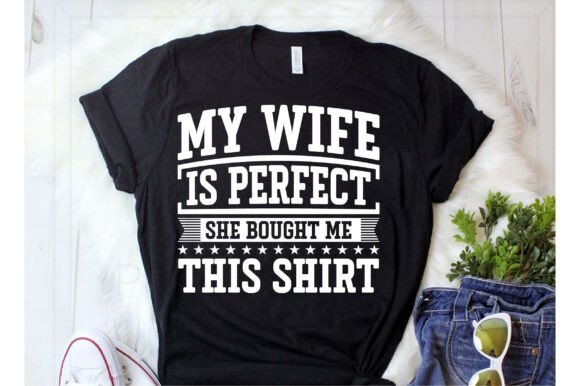
Review: My Wife is Perfect She Bought Me This
As a designer who spends half my life staring at digitized files and the other half troubleshooting stitch errors on the hoop, I have learned to be skeptical of novelty text designs. There is a fine line between a charming personal gift and a cluttered mess that looks cheap when stitched out. Recently, I evaluated a design titled My Wife is Perfect She Bought Me This. At first glance, it falls into the category of T-Shirt Designs and Graphics that are ubiquitous in the digital marketplace. However, for those of us looking to turn these digital assets into tangible, high-quality handmade products, the devil is always in the details.
This review is not just about whether the file opens correctly; it is about how this design performs as a machine embroidery design in real-world scenarios. Whether you are an Etsy seller looking for your next best-seller or a crafter preparing a sentimental personalized gift, understanding the practical application of this graphic is crucial.
First Impressions and Visual Personality
The phrase "My Wife is Perfect She Bought Me This" carries a specific mood. It is humorous, slightly self-deprecating, and deeply affectionate. In the world of custom apparel, this kind of copy resonates because it tells a story instantly. Visually, the design likely relies heavily on typography. When evaluating such a layout, my immediate concern is legibility. Embroidery is a tactile medium, and unlike printing, it has physical limitations regarding thin lines and intricate curves.
The design’s strength lies in its emotional appeal. For a holiday embroidery project or a wedding gift, this sentiment hits the right note. It transforms a standard item into a conversation piece. However, the visual personality must be balanced with technical execution. If the lettering is too ornate or the spacing too tight, the design risks becoming a blob of thread rather than readable text. As a reviewer, I look for clean lines and sufficient negative space, which allows the fabric texture to show through and prevents the stitches from pilling up over time.
Real-World Application: From File to Finished Product
Let’s imagine a practical scenario. You are preparing merchandise for a craft fair or listing items on your small shop product page. You decide to use this design on a heavyweight cotton sweatshirt for a husband-and-wife team brand. How does My Wife is Perfect She Bought Me This translate?
In the context of custom apparel, this design works exceptionally well on chest placements or centered back prints. The humor is best appreciated when the viewer can read the entire phrase without squinting. On a tote bag design, the contrast might need to be higher to ensure the text pops against the canvas. Similarly, if you are creating baby embroidery items, such as a onesie or a burp cloth, this design might feel a bit mature unless adapted for a softer color palette.
For commercial embroidery projects, versatility is key. This graphic can easily be adapted into an embroidered patch for a denim jacket or applied to a kitchen towel for a housewarming gift. The adaptability of the design assets means it can serve multiple purposes, but only if the underlying structure of the embroidery file supports it. A dense fill stitch area might look great on a stable cap hat but could distort significantly on a stretchy t-shirt material.
Technical Considerations and Stitch Clarity
When working with any embroidery file, stitch density is a primary factor. High-density areas can cause puckering, especially on lighter fabrics. If this design features heavy satin stitch borders around the letters, it adds durability but also weight. For a delicate pillow cover or tea towels, excessive density might make the fabric stiff and uncomfortable.
Thread colors play a massive role in visual appeal. Since the description mentions 100 editable files and 100 color changeable options, you have significant flexibility. However, choosing the wrong thread color combination can ruin the professional look of the finished product. For instance, using bright neon threads on dark fabric might create a harsh glare, while low-contrast threads on light fabric can disappear entirely. Always test your thread colors against your actual fabric swatches before committing to a bulk run.
Another critical aspect is the hoop size. Larger designs require larger hoops, which can limit where you can place the artwork on certain garments. If the design is too wide for a standard 4x4 inch hoop, you may need to reposition elements or use a multi-hooping technique, which increases production time and the risk of misalignment.
Where to Use Carefully
Not every surface is suitable for every design. Here are specific areas where you should exercise caution:
- Small Hoop Sizes: If the text is cramped, reducing the size further will compromise readability.
- Textured Fabrics: Burlap or heavy tweed can hide fine details, making the design look muddy.
- Stretchy Fabric: Knits and spandex blends can distort under the tension of the needle and stabilizer, leading to wavy lines.
- Curved Surfaces: Caps and hats present unique challenges. Flat designs often need to be adjusted to follow the curve of the head, or they will look disjointed.
- Dense Stitch Areas: Avoid placing heavy blocks of stitching near edges or seams, as this can cause tearing during frequent washing.
Impact on Brand Consistency and Customer Trust
For Etsy sellers and creative entrepreneurs, the quality of your embroidery directly impacts customer trust. A poorly digitized design with loose threads, visible backing, or skipped stitches signals amateur work. Conversely, a clean, well-executed My Wife is Perfect She Bought Me This design enhances the perceived value of the handmade product.
Professionalism in presentation matters. Using printable mockups to showcase your design in realistic settings helps buyers visualize the final result. Ensure that your digital embroidery file is compatible with your machine and that you have tested it thoroughly. Checking small details, such as the corners of letters and the transition between different stitch types, ensures a polished finish.
Practical Designer Notes
- Test on Scrap Fabric: Never rush into a final product. Run the design on a scrap piece of the same fabric to check for puckering and alignment.
- Review Stitch Density: Look for areas where the fabric might be overwhelmed by thread. Adjust the underlay or density if necessary.
- Inspect Small Details: Tiny text or decorative accents may not stitch out clearly. Simplify if needed.
- Confirm Licensing: Before selling finished items or digital products, verify the license terms. Ensure you have the right to use the design commercially.
- Use Proper Stabilizer: Choose a stabilizer that matches the fabric weight and stretch to prevent distortion.
- Check Black and White Mockups: Sometimes color distracts from layout issues. View your design in grayscale to assess balance.
Final Verdict
My Wife is Perfect She Bought Me This is a solid choice for designers looking to add humor and heart to their collection. Its strength lies in its relatable message and potential for customization. By paying attention to stitch density, thread selection, and fabric compatibility, you can transform this simple graphic into a standout piece of custom apparel.
Whether you are creating a personalized gift for a loved one or building a robust catalog for your craft business, this design offers a versatile foundation. Just remember that the success of any embroidery project depends less on the file itself and more on the care and precision you bring to the hoop. Test thoroughly, plan strategically, and let the quality of your work speak for itself.