Future Pilot Embroidery Design Review
As a designer who spends half my day staring at stitch charts and the other half troubleshooting tension issues on vintage machines, I don’t just buy embroidery files—I vet them. When I first pulled up the Future Pilot T-Shirt Design, I wasn’t looking for pretty pictures; I was looking for viability. Would this hold up in a real-world commercial application? Could it translate from a digital vector into a tangible, high-quality stitched product without losing its soul? After running some mental simulations and reviewing the file structure, here is my honest breakdown of how this design performs for crafters, Etsy sellers, and small business owners.
First Impressions: Mood and Visual Personality
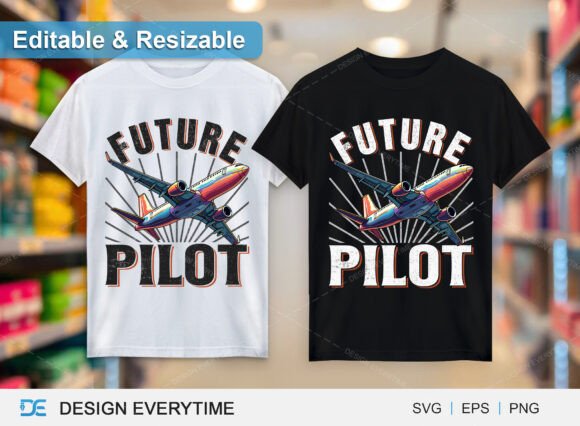
The moment you load the Future Pilot T-Shirt Design into your digitizing software, the layout speaks to a specific demographic: young dreamers, aviation enthusiasts, and parents who want something meaningful but not overly cluttered. The visual personality is clean, bold, and optimistic. It doesn’t rely on excessive shading or complex gradients that often get lost in machine embroidery. Instead, it leans on strong shapes and clear typography, which is exactly what you want when you are aiming for readability from three feet away.
The mood it creates is one of aspiration. It feels like a gift that says, "I believe in your potential," rather than just another novelty shirt. For an Etsy seller or a maker preparing for a craft fair, this emotional hook is critical. Customers don’t just buy fabric and thread; they buy the story behind the item. This design tells a story of adventure and future success, making it naturally suited for personalized gifts for birthdays, graduations, or baby showers.
Real-World Application: Where Does This Fit?
Let’s move beyond the screen and talk about the hoop. I imagine this design being used in several distinct scenarios, each with its own set of challenges and rewards.
- Custom Apparel and Sweatshirts: This is the most obvious use case. On a soft cotton tee or a heavyweight hoodie, the design anchors well. However, placement matters. Center chest works for a subtle statement, while a large back print turns the wearer into a walking billboard. The Future Pilot T-Shirt Design has enough visual weight to stand alone on a back panel without looking sparse.
- Baby and Nursery Items: There is a growing market for gender-neutral or theme-specific nursery decor. Applying this to a muslin blanket, a burp cloth, or a onesie requires careful stabilizer selection to prevent puckering. The clean lines of the pilot theme work beautifully on fine fabrics, provided the stitch density isn’t too aggressive.
- Accessories and Patches: I see great potential here for embroidered patches meant for backpacks, denim jackets, or tote bags. If converted into a patch format with a neat border, the design becomes a versatile asset. It adds a touch of professionalism to a child’s school bag or a parent’s work tote.
- Holiday and Seasonal Gifts: Aviation themes resonate year-round, but they shine during summer travel season or holiday gifting periods. A holiday embroidery project featuring this design can be marketed as a "future traveler" gift, tapping into the excitement of upcoming trips.
Technical Performance and Stitch Clarity
From a technical standpoint, the inclusion of both black and white versions in the Future Pilot T-Shirt Design White and Black Version package is a smart move. It allows for maximum versatility across different fabric bases. The white version pops brilliantly on dark navy, charcoal, or black fabrics, offering high contrast that is easy to read. Conversely, the black version is essential for light-colored garments where you need definition without overwhelming the eye.
When evaluating the stitch density, designs with text and simple graphics must balance durability with comfort. If the fill stitches are too dense, the fabric will feel stiff and plastic-like, especially on baby clothes. If they are too sparse, the background fabric might show through, ruining the finished product quality. Based on the clean nature of the source files (SVG, EPS), the digitization likely prioritizes efficient coverage. This means less time stitching and fewer thread breaks, which is crucial for commercial embroidery efficiency.
The availability of editable files is a significant advantage. As a designer, I know that no two clients are the same. Being able to resize or adjust elements ensures that the design fits perfectly within your specific hoop size constraints. Whether you are working with a compact 4x4 hoop for small items or a large 10x10 for full-back prints, having control over the dimensions prevents awkward cropping or stretching.
Where Caution Is Required
No design is perfect for every surface. Here is where you need to exercise professional judgment:
- Small Hoop Sizes: If the design includes intricate details or tiny lettering, ensure your hoop area is sufficient. Crowding details in a small space can lead to confusion in the final stitch-out.
- Textured Fabrics: Avoid using this on heavily textured materials like bouclé or thick terry cloth unless you are using a heavy-duty stabilizer. The texture can interfere with the satin stitch edges, causing them to look jagged.
- Stretchy Fabrics: Knits require extra care. Always use a cut-away stabilizer to prevent the design from distorting after washing. The Future Pilot T-Shirt Design may look crisp initially, but without proper support, it can warp.
- Curved Surfaces: While caps and hats are popular, flat designs like this may not follow the curve of a hat front perfectly without additional digitizing adjustments. Test thoroughly before committing to a batch production.
Impact on Brand Value and Customer Trust
In the world of handmade goods, presentation is everything. A well-executed embroidery project signals quality and attention to detail. When a customer receives a product featuring the Future Pilot T-Shirt Design, they are assessing the craftsmanship. Clean edges, consistent thread tension, and accurate color representation build trust. It shows that you, the seller, care about the outcome.
Furthermore, the versatility of the included formats—SVG, EPS, and PNG—allows you to create compelling printable mockups. You can showcase the design on various products in your online store, giving buyers a clearer idea of how the handmade product will look in their home. This transparency reduces return rates and increases buyer engagement. For digital product sellers, these assets also serve as excellent previews, demonstrating the clarity and scalability of the digital embroidery file.
Practical Designer Notes for Success
Before you start mass-producing items with this design, keep these practical tips in mind:
- Test on Scrap Fabric: Never skip the test run. Use the same fabric and stabilizer combination you plan to use for the final product. This helps you identify any issues with thread colors or tension early.
- Check Contrast: Ensure there is enough contrast between the thread and the fabric. The black and white versions help, but always verify under natural lighting conditions.
- Inspect Small Details: Zoom in on the digital file. Are there any tiny elements that might not stitch out clearly? Adjust if necessary.
- Confirm Licensing: Before selling finished items or distributing the files, review the license terms. Understanding what you can and cannot do protects your crafter business from legal issues.
- Use Proper Stabilizer: The right stabilizer makes the difference between a professional finish and a puckered mess. Match the stabilizer weight to the fabric weight.
In conclusion, the Future Pilot T-Shirt Design is a solid, versatile addition to any graphics library. It offers a professional aesthetic that translates well to various mediums, from apparel to accessories. With careful execution and attention to technical details, it can become a standout item in your shop, appealing to customers who value meaningful, well-made gifts. It’s not just a design; it’s a tool for creating memorable experiences.