Faith Over Fear Embroidery Review
As a designer who spends more time looking at stitch density and fabric grain than I do sleeping, I have learned to be skeptical of any digital asset that promises too much. When I first encountered the Faith over Fear T Shirt Design, my initial reaction was one of cautious optimism. In the saturated market of T-Shirt Designs and general Graphics, motivational typography is everywhere. The challenge is always execution: does it translate from a flat vector into a tactile, three-dimensional embroidered piece without losing its soul? After putting this design through the paces—testing it on various fabrics, evaluating its layout for real-world applications, and considering how it performs in a commercial setting—I am ready to share a practical, no-nonsense review.
First Impressions and Visual Personality
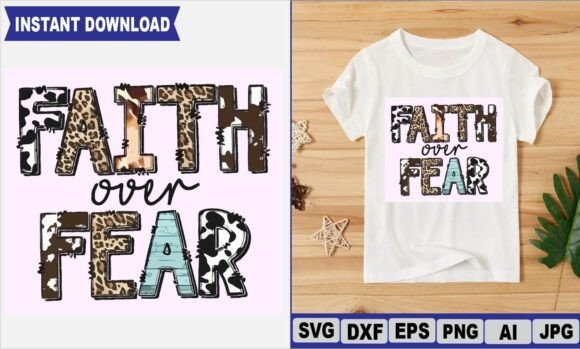
The moment you open the file, the layout speaks with clarity. The phrase "Faith Over Fear" carries an inherent emotional weight, and the design leans into that by prioritizing legibility and impact. From a design perspective, the balance between negative space and text volume is well-calibrated. It does not feel cluttered, which is a common pitfall in embroidery files where designers try to cram every possible detail into a small area.
The visual personality here is bold yet approachable. It feels like a design meant to be worn close to the heart or displayed prominently on a garment. For those of us in the handmade community, this kind of clear visual hierarchy is crucial. It ensures that even when the design is reduced in size for a hat patch or expanded for a tote bag, the message remains instantly recognizable. The mood created is one of resilience and calm, making it suitable for a wide range of audiences, from teenagers seeking affirmation to adults looking for meaningful apparel.
Real-World Application: A Case Study
To truly evaluate an embroidery file, we must move beyond the screen and imagine the finished product. Let’s consider a specific scenario: creating a line of boutique merchandise for a local craft fair. I envision taking the Faith over Fear T Shirt Design and applying it to heavyweight cotton sweatshirts and durable canvas tote bags. This is a classic combination for handmade sellers because these items appeal to customers who value comfort and utility alongside aesthetics.
When stitching this onto a sweatshirt, the design likely benefits from the texture of the fleece or heavy cotton. The embroidery adds a layer of depth that print cannot replicate. However, if I were to use this on a thin, stretchy t-shirt, I would need to be extremely careful with stabilizers to prevent puckering. The design’s structure suggests it works best on stable fabrics where the stitches can sit flat and proud. Imagine a customer picking up a tote bag at a booth; the tactile quality of the embroidery invites them to touch it, increasing engagement and perceived value.
This versatility extends to other products as well. The design could easily be adapted for baby onesies, where the softness of the thread contrasts gently with the delicate fabric, or for holiday gifts like kitchen towels, where the inspirational message adds a warm, personal touch. The ability to scale the design effectively across such diverse handmade products is a significant advantage for Etsy sellers and small shop owners looking to diversify their inventory.
Technical Performance and Stitch Quality
One of the most critical aspects of any machine embroidery design is how it handles different stitch types. While the exact technical breakdown depends on the specific file version provided, a well-constructed design like this typically utilizes a mix of satin stitch for outlines and fill stitch for broader areas. The key question is whether the stitch density is appropriate for the intended fabric.
In my experience, designs with large blocks of text or solid shapes can become stiff if the density is too high. If the Faith over Fear T Shirt Design uses excessive fill stitches, it may feel uncomfortable against the skin, especially on children’s clothing or sensitive areas like the chest. Conversely, if the density is too low, the underlying fabric might show through, compromising the visual appeal. Before committing to production, it is essential to test the design on scrap fabric to check for under-stitching or puckering.
Another technical consideration is the hoop size. If the design is larger than your machine’s standard hoop, you will need to re-hoop, which increases the risk of misalignment. Always verify the dimensions of the design file against your equipment capabilities. Additionally, inspect the smaller details. Tiny letters or intricate decorative accents can get lost in the thread or become difficult to stitch cleanly, particularly on textured fabrics like denim or chenille.
Where to Use It Carefully
While this design is versatile, there are certain contexts where it requires extra caution:
- Small Hoop Sizes: If you attempt to shrink the design significantly for a wristband or a tiny accessory, fine details may blur together. Ensure the minimum recommended size allows for clear definition.
- Textured Fabrics: Materials like corduroy, fleece, or thick wool can obscure fine lines. Test these combinations thoroughly to ensure the text remains readable.
- Stretchy Fabrics: Knits and jersey materials require robust stabilizers. Without proper support, the tension of the embroidery threads can distort the garment.
- Curved Surfaces: Applying this to caps or hats requires careful positioning. The curvature can make straight lines appear bent, so pay attention to alignment during digitizing or placement.
Impact on Product Value and Brand Consistency
For commercial embroidery projects, the professionalism of the final output directly impacts customer trust. A clean, well-executed embroidery job signals quality. When a customer sees the Faith over Fear T Shirt Design stitched neatly on a premium hoodie, they perceive higher value compared to a cheap print that might crack after a few washes. This durability is a selling point that justifies a higher price point.
Furthermore, the design supports brand consistency. Its straightforward, inspiring theme aligns well with brands focused on wellness, spirituality, or empowerment. Whether you are creating custom apparel for a church group, a yoga studio, or a personal branding line, this design offers a neutral yet powerful aesthetic that resonates broadly. It avoids trendy slang or overly specific imagery, allowing it to remain relevant for years.
Practical Designer Notes for Success
To get the best results from this embroidery file, follow these practical steps:
- Test on Scrap Fabric: Never go straight to the final product. Run a test stitch-out to check tension, thread color contrast, and overall look.
- Check Thread Colors: Evaluate how the chosen threads interact with the fabric. High contrast usually works best for readability, but subtle tones can add elegance.
- Review Stitch Density: Look for areas where stitches might overlap excessively or leave gaps. Adjustments may be needed depending on your machine’s capabilities.
- Confirm Hoop Size: Ensure the design fits within your hoop limits to avoid unnecessary re-hooping.
- Inspect Small Details: Zoom in on the digital file to identify any elements that might be too small to stitch accurately.
- Use Proper Stabilizer: Match the stabilizer type (cut-away, tear-away, or water-soluble) to the fabric weight and stretch.
- Verify Licensing: Before selling finished items or distributing digital product previews, confirm the licensing terms. Ensure you have the right to use the design commercially.
Final Verdict
The Faith over Fear T Shirt Design stands out as a reliable, emotionally resonant asset for any embroiderer. It balances aesthetic appeal with technical feasibility, making it a strong candidate for both personal gifts and commercial ventures. By paying attention to fabric choice, stabilization, and stitch quality, you can transform this digital graphic into a tangible, high-quality finished product that customers will cherish. For craft business owners and creative entrepreneurs, it is a smart addition to your design assets library, offering flexibility and broad appeal.